
Federal Reserve
8 articles

How the Beige Book Turns Regional Anecdotes Into Federal Reserve Policy Intelligence
The Beige Book collects anecdotal economic insights from 12 Federal Reserve districts, synthesizing them into a national report for the FOMC. This qualitative intelligence provides a forward-looking view of economic sentiment that complements hard data for monetary policy decisions.

How Fed Balance Sheet Runoff Reaches Corporate Borrowing Costs: The QT Transmission Chain
Quantitative tightening raises corporate borrowing costs through a liquidity channel draining bank reserves and a portfolio balance channel pushing investors out of corporate bonds as Treasury yields rise. This article maps the step-by-step transmission from Fed balance sheet reduction to wider corporate credit spreads and higher debt issuance costs.

How the Fed Balances Maximum Employment and Stable Prices: The Dual Mandate, Explained
The Federal Reserve operates under a dual mandate from Congress: to achieve maximum employment and maintain price stability. The central bank balances these goals by assessing economic gaps relative to its 2% inflation target and its broad definition of maximum employment, adjusting monetary policy accordingly.

AI Optimism Lifts Stocks Again, But a Fed Decision and Big Tech Earnings Will Test the Rally This Week
AI optimism is driving a tech-led stock rally, but this momentum faces immediate tests from an upcoming Federal Reserve policy decision and key Big Tech earnings reports. Deeper concerns about policy uncertainty also loom, potentially impacting long-term asset valuations and capital allocation.

The Fed's Evolving Toolkit for Its Dual Mandate
The Federal Reserve implements its dual mandate of maximum employment and price stability by adapting its monetary policy tools. Since the 2008 financial crisis, the Fed has transitioned from a limited-reserves system to an ample-reserves regime, now relying on administered interest rates.

The Phillips Curve and the Federal Reserve's Evolving Monetary Policy Trade-offs
The Phillips Curve, an economic model linking unemployment and inflation, is crucial for the Federal Reserve's dual mandate but has evolved significantly. Its observed flattening and the increasing importance of inflation expectations challenge traditional monetary policy trade-offs.

U.S. Q2 GDP Growth Revised Up to 2.2% Amid Strong Consumer Spending and Business Investment
The U.S. economy's Q2 2026 GDP growth was revised upward to 2.2%, primarily fueled by robust consumer spending and significant business investment in areas like AI infrastructure. This stronger-than-expected performance indicates economic resilience amidst Federal Reserve rate hikes.
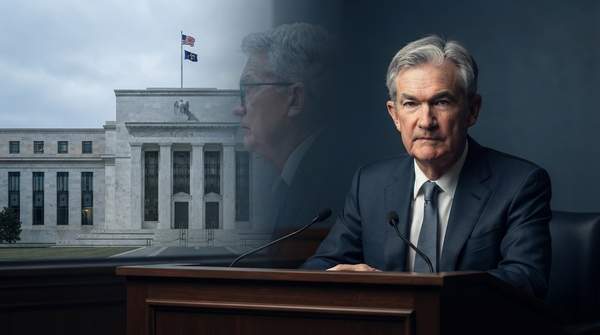
Understanding the Federal Reserve's Quantitative Tightening Policy
Quantitative Tightening (QT) is a Federal Reserve monetary policy tool designed to shrink its balance sheet and reduce liquidity in the banking system. It operates as the inverse of Quantitative Easing (QE), allowing bonds to mature without reinvestment to put upward pressure on long-term interest rates and cool the economy.